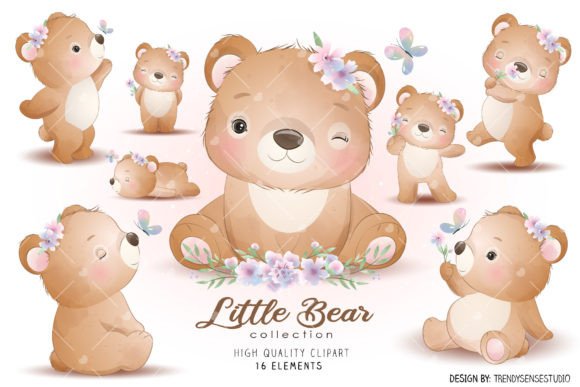
Little Bear Collection Clipart: A Practical Guide to Integrating Watercolor Assets into Creative Workflows
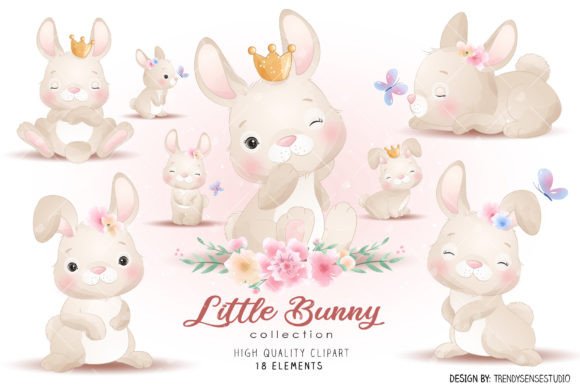
In the modern digital landscape, where visual communication is paramount, the distinction between a generic design and a professional brand often lies in the quality and consistency of its assets. Little Bear Collection Clipart from TrendySenseStudio represents more than just a simple download; it is a foundational resource designed to streamline the creative process for professionals, entrepreneurs, and hobbyists alike. This collection offers a specific set of high-quality watercolor illustrations that bridge the gap between artistic expression and technical utility.
The core value of this asset pack lies in its versatility across the entire project lifecycle. Whether you are a small business owner finalizing packaging designs, an educator preparing classroom materials, or a freelancer creating marketing collateral, the workflow integration of these graphics can significantly reduce production time while elevating aesthetic standards. The collection features 16 distinct painted watercolor elements, delivered in multiple formats to ensure compatibility with diverse software ecosystems.
Strategic Asset Selection and Workflow Integration
Effective design workflows begin long before the actual creation phase; they start with strategic planning and asset curation. When initiating a new project—be it a series of greeting cards, a branding package for a startup, or a children's book layout—the selection of clipart must align with both the visual identity and the technical requirements of the end product. Little Bear Collection Clipart addresses this need by providing high-resolution files (300 dpi) that maintain clarity regardless of the output scale.
For professionals working on print media, such as invitations, business cards, or stationery, the resolution is a critical factor. Low-quality images often result in pixelation when scaled up, ruining the final product. By utilizing these 13 x 13 inch 300 dpi PNGs and JPEGs, designers can ensure that their physical products meet industry standards for sharpness and detail. This eliminates the common bottleneck of having to source alternative images mid-project due to poor quality, thereby maintaining project momentum.
Beyond print, the digital application of these assets requires a different approach. For web developers, app designers, or social media managers creating content for websites, apps, and mobile interfaces, the transparency of PNG files is essential. These assets can be seamlessly layered over various backgrounds without unsightly white boxes, allowing for dynamic and engaging user experiences. The ability to use these graphics in software, games, and phone case designs demonstrates their adaptability to complex digital environments.
Technical Compatibility and File Format Versatility
A frequent challenge in creative implementation is file compatibility. Designers often find themselves stuck because a client prefers editable vector files, while another needs raster images for quick social media posts. Little Bear Collection Clipart resolves this friction by offering a comprehensive suite of formats within a single purchase. The inclusion of fully editable EPS and AI (Adobe Illustrator) files provides a robust solution for users who require customization.
For those engaged in logo design or large-scale printing like banners and fabric patterns, vector formats are indispensable. They allow for infinite scaling without loss of quality and enable precise manipulation of individual color paths. If a brand guideline requires a specific shade of blue for a bear illustration, the AI and EPS files allow the designer to adjust the hue instantly without degrading the image data. This level of control is vital for maintaining brand consistency across all marketing materials.
Conversely, the 16 included JPEG files offer immediate usability for tasks that do not require editing, such as uploading to e-commerce platforms or embedding in email newsletters. The absence of watermarks on purchased art ensures that the final deliverables look polished and professional, a crucial detail for freelancers billing clients based on the perceived value of their work. Furthermore, the compatibility with sublimation designs opens doors for creators in the apparel and home decor sectors, allowing them to transfer these soft, organic textures onto T-shirts, pillows, and other merchandise with precision.
Implementation Strategies Across Industries
The practical application of this collection extends far beyond simple decoration. In the realm of education, teachers can utilize these watercolor bears to create engaging worksheets, classroom decorations, and reward stickers. The soft, inviting nature of the watercolor style helps lower anxiety levels in learning environments and makes educational materials feel less rigid. Similarly, bloggers and content creators can use these assets to break up text-heavy articles, adding a touch of personality that keeps readers engaged.
Entrepreneurs launching new products will find the Little Bear Collection Clipart particularly useful for packaging and branding. The organic feel of watercolor art conveys authenticity and craftsmanship, qualities that resonate with consumers looking for handmade or artisanal goods. Whether designing labels for a small-batch tea company or creating a logo for a boutique toy store, these graphics provide a cohesive visual language that can be applied consistently across business cards, flyers, and social media ads.
For game developers and software designers, the inclusion of sticker-like assets allows for the creation of user interface elements that feel friendly and approachable. These graphics can serve as avatars, achievement badges, or decorative elements within a game environment, enhancing the overall user experience without requiring expensive custom illustration services.
Quality Control and Long-Term Asset Management
Sustainable creative practices involve building a library of assets that can be reused and repurposed over time. High-quality clipart collections like this one serve as long-term investments rather than one-off purchases. Because the files are provided in standard, widely supported formats, they remain usable even as software versions evolve. This future-proofing is essential for businesses that plan to expand their product lines or refresh their branding years down the road.
Organization is another key component of efficient workflow. When downloading a pack containing 16 PNGs, 16 JPEGs, and 2 vector files, it is important to establish a logical folder structure immediately. Naming conventions should reflect the content and usage type (e.g., "Bear_Vector_Editable," "Bear_Print_PNG"). This preparation prevents the confusion of searching through unorganized files later in the process. Additionally, verifying the DPI and dimensions before starting a project ensures that the asset fits the intended canvas size, preventing last-minute resizing issues that can compromise image integrity.
The transition from concept to execution is smoother when the tools at hand are reliable. By choosing assets that are compatible with sublimation, print-on-demand services, and standard design software, creators eliminate technical barriers. This allows them to focus on the creative aspects of their work—storytelling, branding, and user experience—rather than troubleshooting file errors or low-resolution outputs.
Maximizing Value Through Customization
The true potential of Little Bear Collection Clipart is unlocked through customization. While the pre-painted watercolor style is beautiful as-is, the availability of editable vector files invites further creativity. Designers can combine these bear elements with typography, geometric shapes, or other graphical elements to create unique compositions. For instance, a marketer might overlay the bear graphic with a promotional message on a banner, or a book author might integrate the character into a chapter header.
This flexibility supports a wide range of use cases, from simple personal projects to complex commercial campaigns. The lack of watermarks ensures that the final output is clean and ready for distribution, whether it is being sold as a digital product, printed on merchandise, or used in a corporate presentation. By treating these assets as modular components of a larger design system, users can achieve a high level of professionalism without the overhead of hiring a custom illustrator for every new project.
In conclusion, integrating Little Bear Collection Clipart into your workflow offers a practical solution for enhancing visual content across various mediums. Its combination of high-resolution raster files and editable vector formats makes it a versatile tool for anyone involved in design, marketing, or content creation. By prioritizing quality, compatibility, and organization, creators can leverage these assets to produce consistent, professional results that effectively communicate their message to their audience.